
The Gregorian calendar
The content of this article may seem obvious, but it is human nature to occasionally fall into the trap of equating the length of a calendar month to being four weeks.
For your business and systems to run smoothly, it is important to understand where it is valid to use month durations (a period that varies in length) versus week durations (a period that is always the same length).
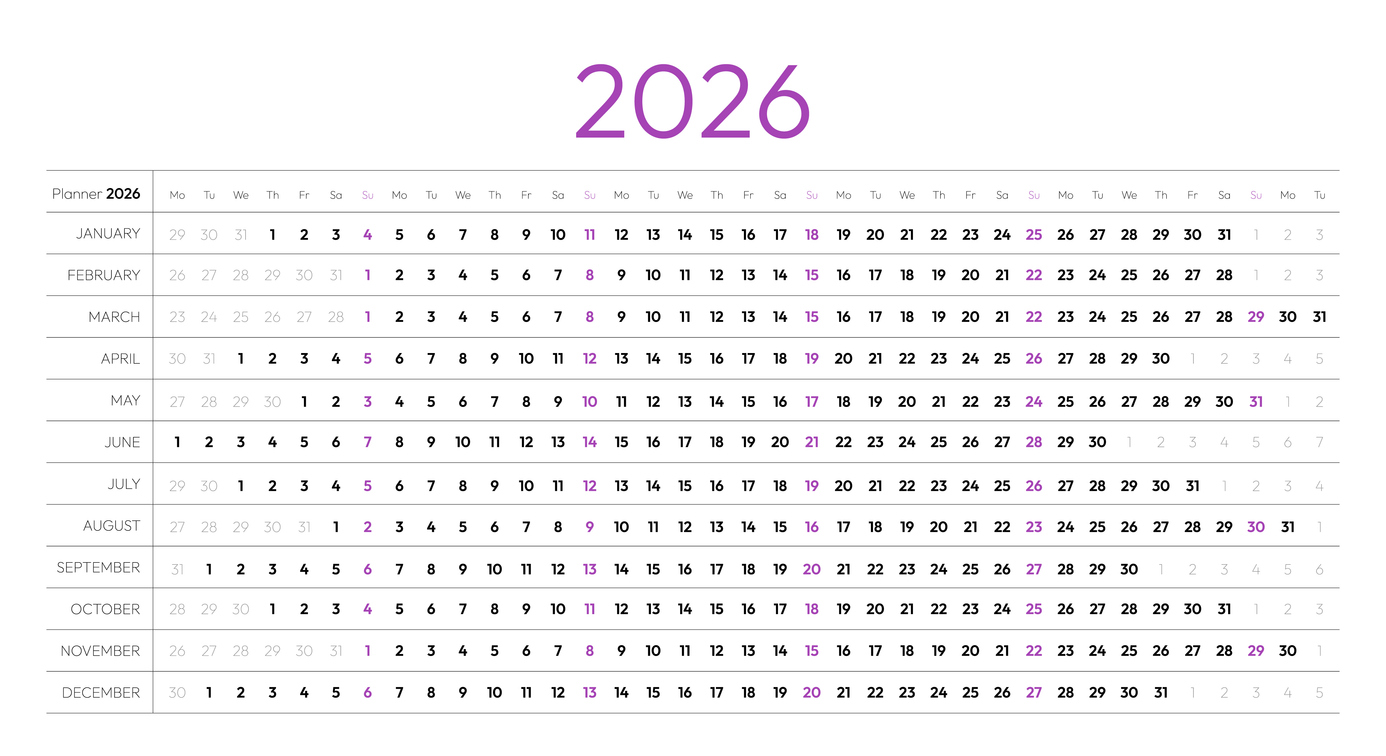
A bit of history
In the fitness industry, gyms are accustomed to operating on a monthly basis. This is mainly for historical reasons, where, in times past, members would be locked into onerous annual contracts. These days, this is seldom the case, with most gyms operating on a monthly-rolling basis with a notice period. However, for many, the change in approach has not filtered down to a corresponding change in business practices.
Across the year, months vary in length. However, over a year, the total number of days is always the same (excepting leap years). Therefore, for an annual contract, small monthly variances were less important. However, if you operate a more modern, rolling monthly contract that delivers x sessions per week, then there is a chance that your business could miss-out on revenue it is owed.
Per week allocations
If you, like most gyms, operate a business model that delivers a member x, y, or z sessions per week, then you should operate a credit cycle that issues credits every x weeks (not monthly). This ensures that your members have access to the number of session credits that they are owed, when they are owed them regardless of the number of weeks in the month.
Unlike many gym management products, GymOS separates the payment cycle from the credit issue cycle, meaning that, if you wish, you can still charge monthly but issue credits, for example, every 28 days (four weeks). That said, the more savvy modern operators have moved to a model that they sell to the member as “it’s £x per week for x sessions, and we bill you every 4 weeks in advance”.
Common sense and objection handling
For some reason, many gym owners think that charging every 4 weeks is problematic. It is not.
Outside of the fitness world, charging in weekly or 4-weekly blocks is commonplace. Examples include:
- Child minding services
- Cleaning services
- Car leasing
- Bus and travel passes (E.g. 28 day Oyster card)
- Meal kit subscriptions
Yes, two charges may fall within a month, but this is for the member to budget. They manage to do so with other products & services, like those listed above, so there is no reason they shouldn’t be able to do so with their gym membership.
Whilst charging in multiples of weeks makes commercial sense and builds a better business model, it remains optional.
However, if you offer your services weekly (I.e. x sessions per week), then you should issue your credits on an x-week schedule. If you do not, you will soon find that members have too many or too few credits versus their correct allocation.